What are the ingredients in your favorite vending machine snack or beverage? Do you know? If you do, you belong to a growing group of consumers who not only know which ingredients are in their food but also know the number of ingredients. According to Andrew Mandyz, Director of Strategic Insights at Nielsen, “There’s a shift in how people are thinking about ‘better for you.’ People are looking for back-to-basics, simpler ingredients.”
Ingredient Labels
Seeing the recipe for your snack or beverage would be the best way to learn about what is in it, and how much of each thing was used. But since that is rarely an option, there is another way for Santa Clarita consumers to learn about what is in their food and drink—by reading ingredient labels. Ingredients are listed in a very specific order. The largest ingredient is listed first, followed by each ingredient until the smallest ingredient. For example, a ready-to-drink cold tea that lists the ingredients tea (water, tea), sugar, and lemon is letting the consumer know that there is more tea than sugar, and more sugar than lemon in the beverage. Nielsen found that “about 61 percent [of consumers] said that the shorter the ingredients’ list, the healthier the product.”
Online Resources
In addition to reading ingredient labels, consumers are researching health information online. Mandzy found that the number of consumers who went online for information went from 48% in 2014 up to 68% in 2016, a 20% increase. With the large amount of health information available online, and more Santa Clarita consumers using the internet, it is important to know how to determine if a website contains reliable information. Johns Hopkins Bayview Medical Center offers some tips:
- Don’t search the entire Internet. Start with the Johns Hopkins Medicine Health Library [or other hospital website] or MedlinePlus.gov.
- Evaluate commercial (“dot com”) sites carefully for bias and conflict of interest.
- Check to see if the information is current (less than three years old).
- Look for the credentials of the author (i.e. doctor, nurse, psychologist) to make sure the information is written by a health professional.

Technology as a Tool
Using technology to track health-related activities and numbers are also on the rise. There are apps that are worn during activities such as running or walking, ones that track the number of hours slept and the quality of sleep, ones that track what an individual has eaten and count calories, and others that track heart health or healthy habits. With so many apps available, it can be challenging to find one that meets a Santa Clarita user’s needs. Harvard Health Publications recommends several things to consider when looking for the right app.
- Have realistic expectations of the technology and watch out for unrealistic claims.
- Read reviews. Try out a few different ones.
- Read the fine print.
- Ask for recommendations.
- Look for ones “sponsored or created by established health advocacy groups, medical organizations, or universities”
Reading ingredient labels, researching health information and monitoring one’s own health-related activities are just a few of the many ways that consumers can become more knowledgeable. Sharon Allison-Ottey, MD and health educator, recently expressed that “the overall trend of a more-educated consumer is excellent” especially when it comes to a person’s diet. Which snack and beverage ingredients do your consumers want to see in their Santa Clarita healthy vending machines?
Contact Santa Clarita Concessions at (661) 259-7310 to learn more about our vending options.




 Caffeinated gum has an additional benefit that caffeinated beverages do not. The caffeine from caffeinated gum bypasses the digestive system and goes straight into your system, so you feel the effect of the caffeine faster.


 Holidays can also be stressful, not just at work, but in general. Why not give them the benefits? A quick “thank you” every morning or afternoon when they need some caffeine? You can’t beat the benefits of in-house coffee. The convenience during long, holiday lines at coffee shops and bitter weather can be huge in boosting office morale.



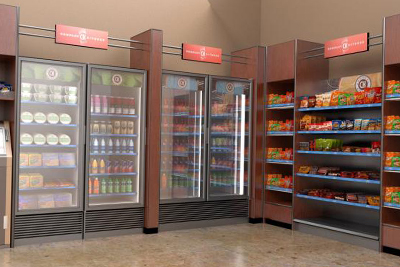
 Micro Markets use stored value cards, credit cards and finger print recognition to make payment as convenient as possible for your employees. With their stored value cards, employees can upload cash or credit (at the kiosk or online) to make a purchase. The card stores the balance, which means no change is given back (eliminating the coin mechanism which is responsible for roughly 90% of all